Let the grammar choose the structure
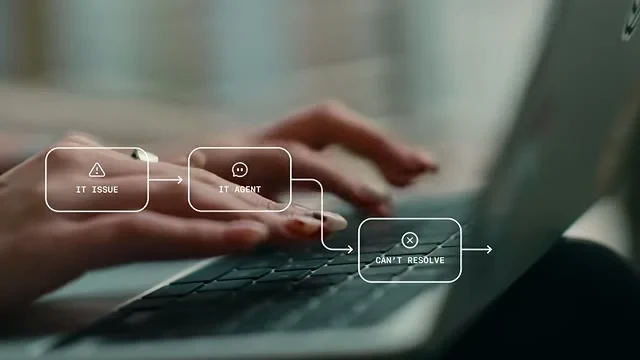
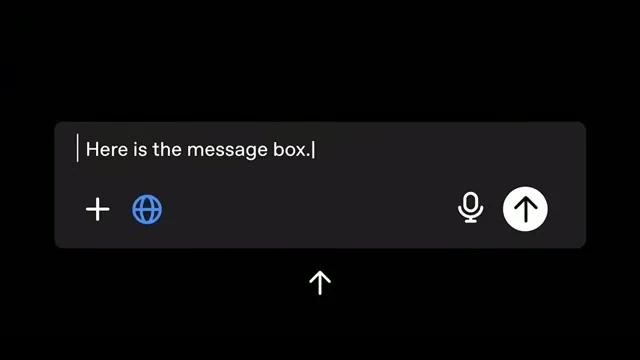
A request becomes typed text in the beginner lesson. An alternative becomes a branching diagram in the IT account. The visual form follows the relationship expressed by the sentence.
Inspect the example →Storytelling / Twelve deeper readings
What is said. Where you look. What the image actually establishes.
A closer pass through twelve films from the latest-100 study, connecting short spoken passages to composition, transitions and the full argument.
12films studied more deeply
3,447estimated words mapped
2,517half-second positions inspected
24native transition windows inspected
Word timing is machine estimated. Frame timestamps are decoded source times. No continuous playback or listening verification. Read the method → · Browse the full 100-film study →
01 / More than a sequence of attractive shots
These are interpretations of the inspected evidence, with specific examples to test them against.
A request becomes typed text in the beginner lesson. An alternative becomes a branching diagram in the IT account. The visual form follows the relationship expressed by the sentence.
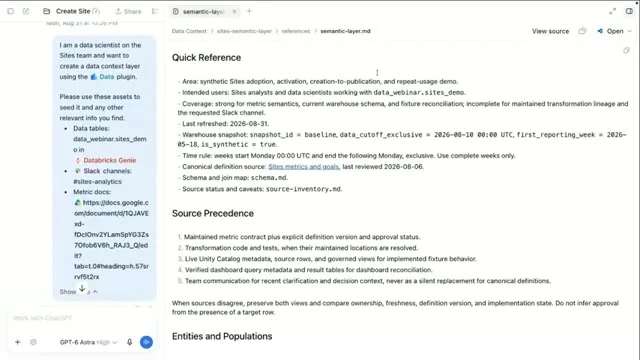
Inspect the example →The semantic-layer explanation holds a document while the narration makes review a condition of reuse. A cut is not needed for every word; a stable referent can carry the clause.
Inspect the example →A typed follow-up can teach how to ask without demonstrating the improved answer. The beginner lesson closes after the request. That distinction changes what a faithful adaptation needs to show.
Inspect the example →The everyday-planning lesson ends with the instructor and a short qualification about the viewer's decision. The product example provides material to judge; the closing establishes who judges it.
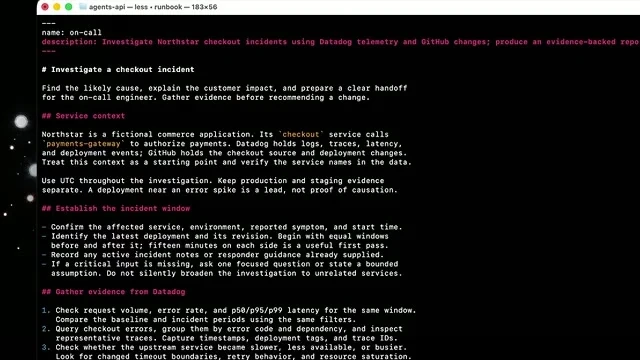
Inspect the example →The Agents API launch uses an incident investigation to connect configuration, log filtering, delegated work and a final report. The audience has a continuing task to follow as the visual mode changes.
Inspect the example →The science portrait opens a computational claim over microscope work. The laboratory images establish the physical practice and the world the research hopes to help. Their relationship to the words is contextual, not a literal product demonstration.
Inspect the example →The site tutorial keeps an existing expense page beside a second request, then shows the changed summary. Creation and revision become separate, visible steps. A later scheduling request remains a request; the film does not show the future run.
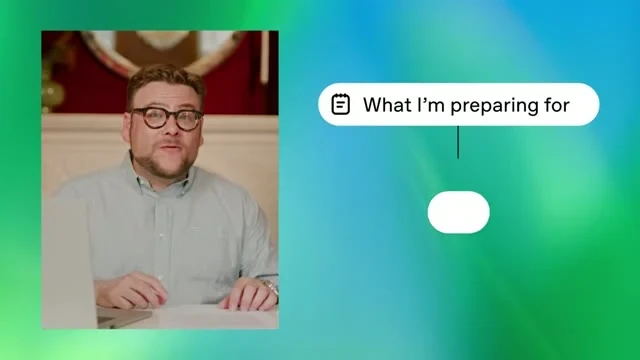
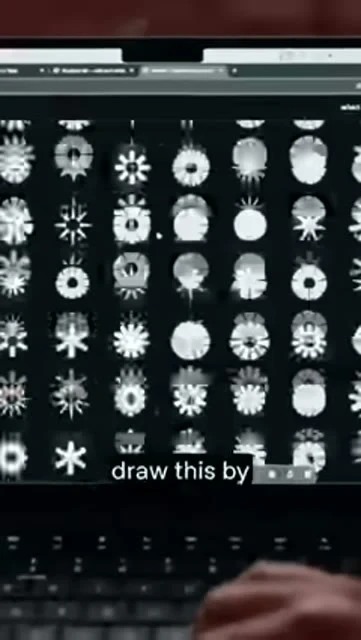
Inspect the example →The portrait-format design conversation holds a letterform while the speaker names adjustable properties. The changing lines have a stable location and subject, so the viewer can follow variation without relearning the frame.
Inspect the example →02 / A varied subset of the latest 100
Each reading includes a short word explorer, composition notes, a full argument map, four context stills and two transitions checked in adjacent frames.
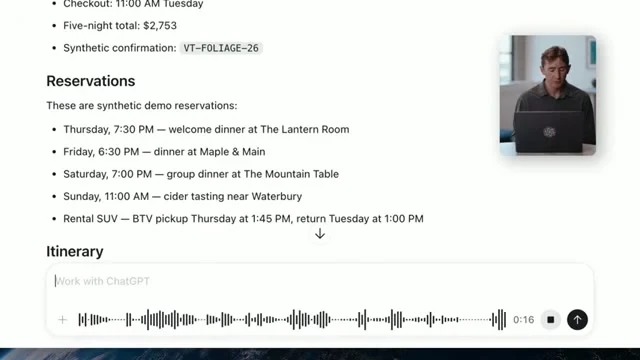
The speech makes human review a condition of reuse. The frame keeps the document available as the thing that needs that review.
The explanation describes several possible outcomes. A diagram turns those alternatives into branches while the filmed workplace keeps the account attached to people.
The lesson makes a small spoken request visible in the composer. Its payoff is teaching the next action; it does not show the answer to that follow-up.
The product organizes the example, but the final composition returns authority to a person. A held table view and a short paraphrase make that qualification the closing idea.
An incident investigation gives the technical features a common purpose. A sparse two-column diagram then turns one efficiency claim into a comparison the viewer can read.
The opening does not illustrate every noun literally. It places a computational promise over physical laboratory work, then uses repeated biological imagery to connect methods, stakes and aspiration.
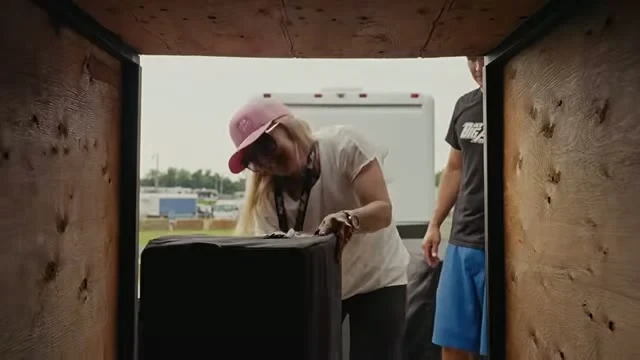
The stunt show provides the spectacle, but the story's problem is the work required to make it happen. A wide view of two people handling equipment makes a short statement about capacity tangible.
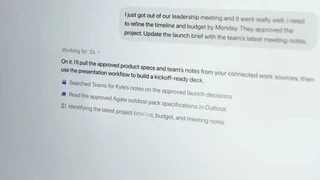
A short request gives the film a concrete task. The surrounding office movement becomes a visual interpretation of coordinated work, while screen inserts carry the actual request, progress and result.
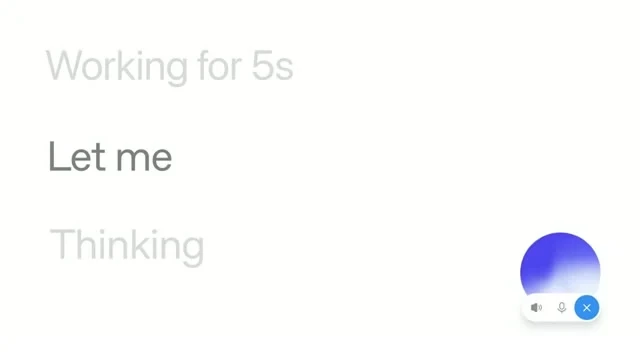
A voice request accumulates in a quiet composition before the film opens the documents behind it. The recurring orb connects speaking, waiting, inspection and the returned explanation.
The tutorial gives an existing site a second request, then shows its revised expense view. Keeping the request and the artifact together makes user control part of the demonstration.
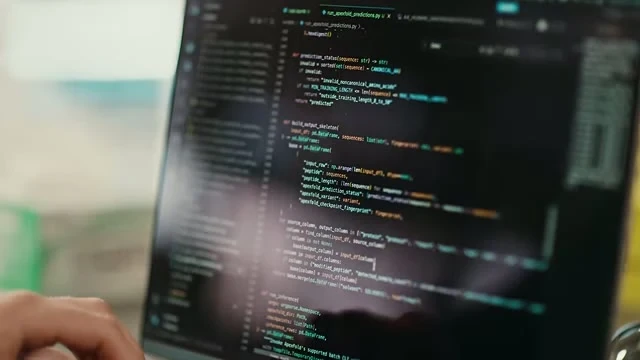
The short moves from a personal account of making a tool to a sustained view of that tool changing. A stacked composition keeps the demonstration and the conversation visible together while the speaker names adjustable properties.
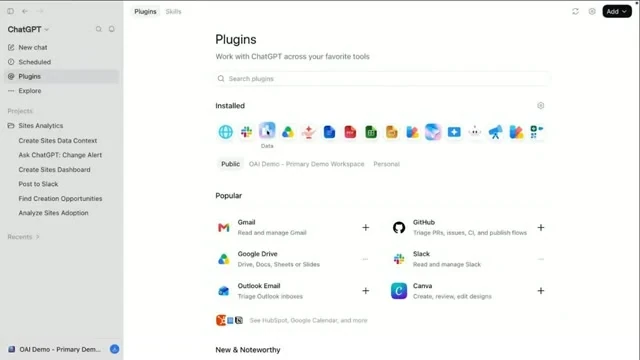
The explanation begins with the context a new analyst would need, then turns that analogy into tools, sources and a reference document. A stable two-column view gives the speaker's directional words a visible destination.
03 / Proposed use in the all-hands
Start from the supplied recording. For each important clause, identify its job: introduce a need, name an object, explain a relationship, demonstrate a change, qualify a claim or hand back a decision. Choose a composition that makes that job easy to follow. Keep the relevant object visible while the sentence refers to it.
When the claim depends on a result, show the result in the real Poe interface. A title, gesture, animation or typed request may explain the claim without proving it. Preserve that distinction in the timed storyboard, along with the actual cue, playback offset and recorded ending buffer.
These are proposed adaptations, not an approved edit list. The source films, branding and demo data remain research references. The presentation should use its own identity and faithful Poe demonstrations.
Open the storyboard worksheet →04 / Scope, evidence and limits
Twelve varied films from the frozen latest-100 cohort received a new pass. Each full audio track was transcribed locally into estimated words. The complete machine text was read, and differences against available channel captions were inspected. Frames were decoded at half-second targets across each film; selected word onsets and two transition windows per film received closer inspection.
This adds depth to twelve films. It does not convert the other eighty-eight readings into word-by-word studies. Neither this pass nor the earlier study includes a continuous playback or human listening review.
The word times are estimates from a local Whisper model. Caption agreement can support wording, but both text sources can be wrong. Proper names, speaker changes, pauses, music and overlapping speech need direct listening before a production decision depends on them.
Each displayed word frame is the first decoded frame at or after that estimated word onset, with the source audio origin accounted for. A precise frame timestamp is not proof of a precise word onset. Broader passage boundaries are approximate; adjacent-frame pairs establish only the illustrated image changes.
A face, a diagram branch or a typed request is visible evidence. Its proposed editorial job is a reading of that evidence. An on-screen result, customer statement or animated metric is a claim within the film, not independent validation of the product or its effect.
Scene-change scores helped locate candidate windows. They were not treated as an edit count. The short published quotations are excerpts; the full machine transcripts stay in the private research record.
One source movie was processed at a time. After its transcript, contact sheets, selected stills, native frame clock and collection receipt were saved, its source movie, extracted audio and loose temporary frames were removed. The public edition contains small reference stills and authored commentary, not downloadable source films or full caption tracks.
Technical method: faster-whisper word timestamps and FFmpeg frame selection and scene candidates. Reviewed September 18, 2026.